
Our flagship roofing product
Standing Seam Metal Roof Panels in NJ, Fabricated to Length
Our standing seam metal roof panels for NJ roofs are fabricated in our shop to the lengths on your order, with matching trim and flashing in the same color. We make them for roofers, and for homeowners who hire a roofer to put them on. We do not install. Your roofer sends the measurements, and the order is delivered in New Jersey or picked up at our shop.
- 5 on Google (4 reviews)
- 26+ years of experience
- Delivery or shop pickup
What are standing seam roof panels?
They are long metal panels that run from eave to ridge and lock together at raised seams. Clips fastened to the deck sit under each seam, so no screw passes through the face of the panel.
On most houses each panel is one piece from top to bottom, so there are no end laps in the field. That is why the panel lengths on your order matter so much. The rest of the roof sits at the edges: eaves, rakes, ridges, valleys, walls and chimneys. We form that trim and flashing on the brake in the same color and finish as the panels.
We have fabricated metal wall panels, aluminum composite panels, custom sheet metal and metal roofing panels in New Jersey for more than ten years. Our owner brings 26+ years of experience with sheet metal.
| Item | Common choice on a New Jersey house | When roofers change it |
|---|---|---|
| Seam type | Snap-lock | Mechanical seam for low slopes, long runs and heavy snow exposure |
| Seam height | About 1 to 1.5 inches | Taller seams where the profile’s slope rating calls for them |
| Panel width | 12 to 18 inches is common | Narrower panels or striations to reduce visible waviness |
| Base metal | 24 gauge Galvalume steel | 22 gauge for stiffness; aluminum near salt water; copper or zinc on request |
| Finish | PVDF (Kynar 500 resin) | SMP on outbuildings and tighter budgets |
| Panel lengths | One panel per run, eave to ridge | Your roofer’s measured length for each run, and the count at each length |
| Trim and flashing | Eave, rake, ridge, valley and wall pieces in the panel color | Custom bends drawn on a sketch with every dimension marked |
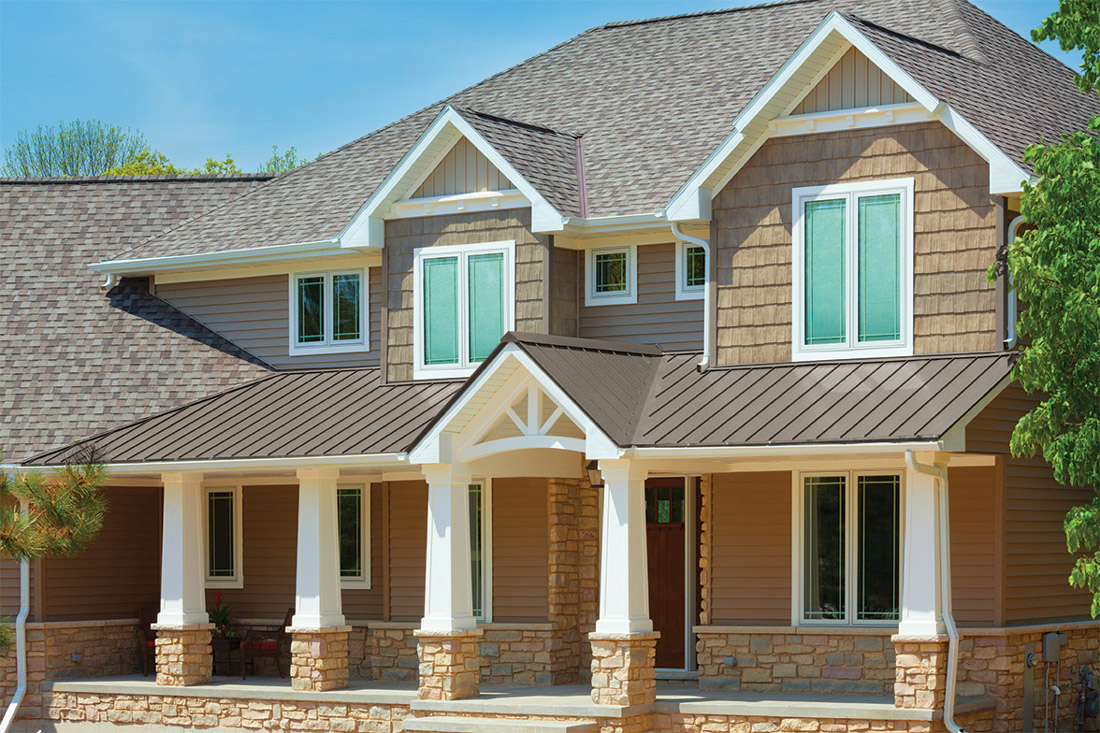
Snap-lock or mechanical seam: which should your roofer order?
Snap-lock suits most steep house roofs. Mechanical seam, folded closed on the roof with a seaming tool, is the stronger choice for low slopes, long panel runs and roofs that hold heavy snow and ice. Our shop makes both, so the seam can follow the roof.
Snap-lock panels press together by hand along the seam. Sheffield Metals lists a 2/12 minimum for its snap-lock profiles and points to roughly 3/12 to 7/12 as their comfortable range.
It also cautions that built-up snow and ice, shifting as temperatures swing, can pull snap-lock seams apart. For snowy regions it points to mechanically seamed panels.
Mechanical seams are folded once (single-lock, about 90 degrees) or twice (double-lock, about 180 degrees). Sheffield rates its 1.5-inch mechanical profile to 2/12, or 1/12 for steel with sealant inside the seam, depending on project conditions. On porches, shed dormers and low additions, that margin matters.
Somerset, Morris and Hunterdon counties sit in New Jersey’s colder 5A energy climate zone. On long or shaded roofs there, many roofers lean toward mechanical seam even at steeper pitches. Your roofer makes the call, and we fabricate the seam on the order.
How tall should the seams be?
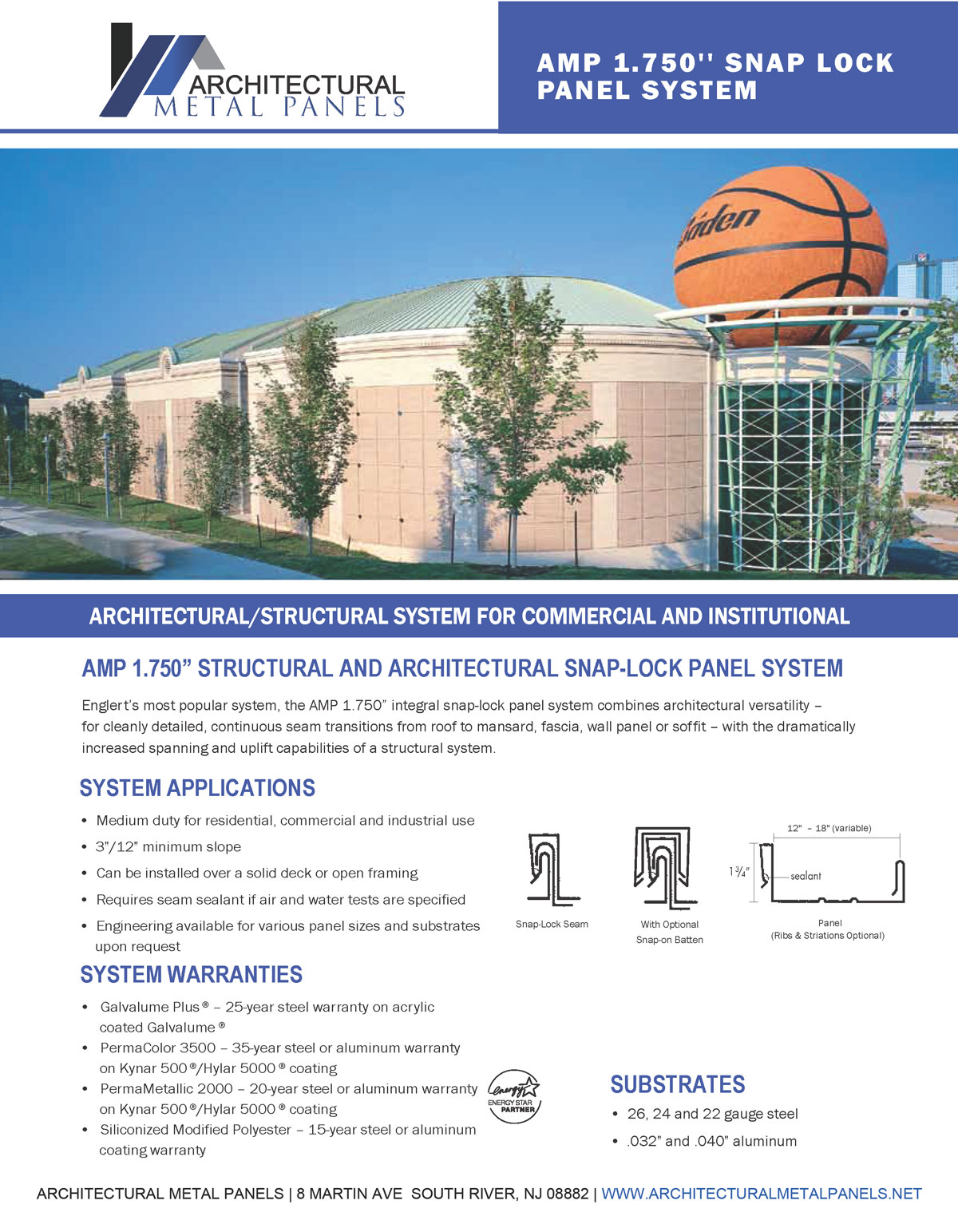
Most house roofs use seams about 1 to 1.5 inches tall, while 2-inch seams are common on low slopes and commercial roofs. A taller seam lifts the joint further above the water running past it.
The profile’s own slope rating governs, not the code minimum alone. We make both snap-lock and mechanical seam panels; ask us which seam heights we can run for your order.
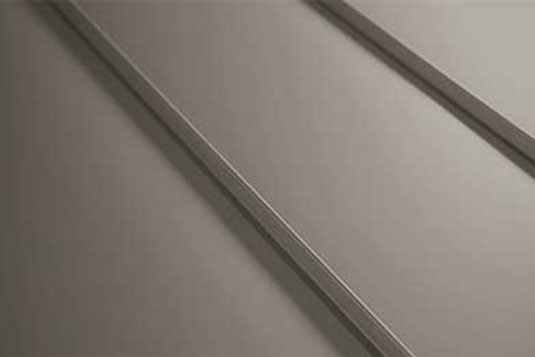
Which gauge and metal should you order?
24 gauge Galvalume steel is the usual choice for houses. 22 gauge is thicker and stiffer, and roofers choose it for wide panels, long unsupported runs and roofs that see foot traffic from solar or chimney service.
A lower gauge number means thicker steel. Thicker panels resist dents from falling branches and show less waviness, at a higher price per square foot. Aluminum is sold by thickness instead, commonly .032 or .040 inch, and copper by weight, such as 16 or 20 ounce sheet. Copper and zinc are available on request; see copper and zinc sheet metal.
Galvalume steel or aluminum near salt water?
Inland, Galvalume-coated steel is the usual base metal. Near the ocean, Raritan Bay or the back bays, aluminum is often the safer choice, because steel substrate warranties exclude salt exposure.
Warranty language is specific, so read it by manufacturer. Metal Sales’ AZ55 Galvalume warranty, for instance, carves out sites within 1,500 feet of salt water, along with marine atmospheres and salt spray. Sheffield Metals describes a typical tiered pattern: 1,500 feet where surf breaks, 800 feet along a large bay, 400 feet beside marsh. Put the job address on your order so the metal fits the site.
Copper creates a second trap. The same Metal Sales warranty excludes areas that receive runoff from copper or lead flashing. A copper bay roof that drains onto Galvalume panels has to be detailed to keep that water apart. Read more in our guide to metal roofing near the Jersey Shore.
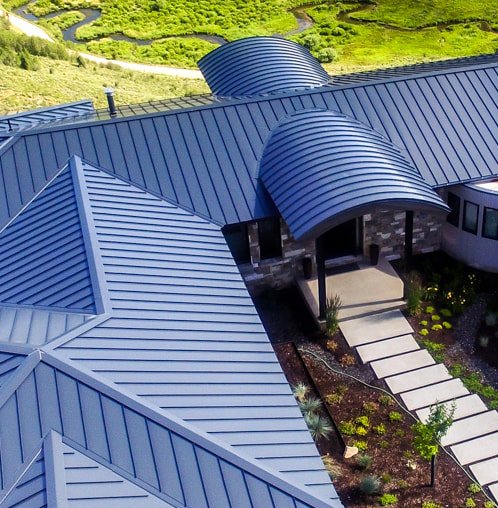
PVDF or SMP: which paint finish lasts longer?
PVDF, often sold under the Kynar 500 resin name, holds color and resists chalking longer than SMP (silicone-modified polyester). PVDF is the usual pick for houses, and SMP suits sheds and outbuildings.
MBCI describes its Signature 300 finish as a 70 percent PVDF resin system and its Signature 200 SMP finish as its most economical option.
Read the fine print on any finish warranty. Sheffield Metals’ warranty review is a useful reality check. On PVDF, it says, chalk and fade coverage commonly lasts 10 to 30 years depending on the color, less than the film adhesion term. And a 40-year headline on SMP paint usually refers to film adhesion alone.
Finish warranties come from the coil manufacturer, and we help you get the documents for the coil on your order. Installation warranties come from your roofer. See our warranties page.
Which trim and flashing come with the panels?
Every edge piece the roof needs, formed in the same color and finish as the panels. Your roofer sends the lengths and quantities, plus a sketch for anything special.
- Eave trim and drip edge
- Rake (gable) trim
- Ridge and hip caps, with closures where the order calls for them
- Valley pans
- Sidewall and endwall flashing where the roof meets a wall
- Transition flashing where the pitch changes
- Chimney flashing and crickets made to your roofer’s dimensions
Custom pieces start from a sketch with each bend, angle and length marked. Our metal flashing page shows the shapes we form most often, and custom fabrication covers parts made from drawings. Other roof panels we make are on the metal roofing panels page.
What does your roofer need to send us?
A cut list or roof plan with every panel length and count, plus the profile, metal, finish, color and trim list. We fabricate from your roofer’s measurements and never measure on site, so field dimensions are the roofer’s responsibility.
- The job address and a contact who can answer questions.
- Profile: snap-lock or mechanical seam, seam height and panel width.
- Metal and gauge or thickness, finish and color.
- For each roof plane: the panel length from eave to ridge, the number of panels at that length, and the pitch.
- Trim and flashing: piece type, length and quantity, with a sketch for any custom bend.
- Delivery or pickup, and any limits at the site for a long-panel delivery.
Panel length depends on the eave and ridge details your roofer plans to use. Measure for those details, not for the edge of the old shingles.
Homeowners: your roofer takes these measurements. Send their numbers with a quote request. Builders with plan sets can send plans for a quote; architectural and commercial orders get shop drawings for approval before fabrication.
How ordering works
From your dimensions to finished parts in four steps
1
Send dimensions or plans
Send a cut list, your installer’s field measurements, or plans and specs, with the profile, metal, finish and color you want.
2
Written quote and drawings
We reply with an itemized quote. Architectural and commercial orders get shop drawings for approval before fabrication.
3
Fabrication in our shop
Panels are cut to length and coping, flashing and trim are formed in our shop to the approved dimensions.
4
Delivery or pickup
Your order is delivered to the job in New Jersey or picked up at our shop, labelled so your installer can find each piece.
How do ordering, delivery and pickup work?
Once you approve the written quote, we fabricate the order and label it so your roofer can find each piece. It is delivered to your job in New Jersey or picked up at our shop during business hours.
Ask about delivery to your job when you order. Long panels need a clear unloading area and enough hands to carry them without kinking, so plan the drop spot with your roofer. Lead times change with the order and the season, so ask us when you request the quote.
Standing seam panels from our shop start at $9 per square foot of roof, materials only (prices as of ).
Published cost guides quote installed totals instead. HomeGuide’s 2026 national guide puts installed standing seam at about $9 to $16 per square foot, a figure that includes labor by others. For a materials price, send your dimensions. Our metal roof panel prices page explains what moves the number.
Installation guidance for your roofer
We do not install, but these are the details we ask roofers to plan for on a New Jersey standing seam roof. The panel manufacturer’s installation guide governs each one.
Underlayment and ice barrier
Metal gets hot in summer sun, so roofers lay a high-temperature synthetic underlayment over the whole deck. New Jersey requires an ice barrier only in Sussex County, where January averages 25 degrees F or colder, according to DCA Bulletin 07-3. Elsewhere, an ice barrier at the eaves and valleys is standard good practice for the roofer.
Fixed and floating clips
A long steel panel grows and shrinks between a January night and a July afternoon. Fixed clips pin each panel at one point, and floating clips let the rest of it slide, so seams stay straight. Clip type and spacing follow the manufacturer’s guide, with tighter spacing near eaves, rakes and corners, where wind uplift is strongest. Under DCA Bulletin 19-1, wind and snow values come from ASCE 7 hazard tools run on the exact address.
Snow retention and ice dams
Snow slides off metal faster than off shingles, so roofers place snow guards above entries, walkways, decks and lower roofs. Clamps from makers such as S-5! grip the seam without drilling the panels. Our snow guard guide covers spacing and types.
Ice dams start inside the house. Heat escaping into the attic melts the snow up high, and the water freezes again at the cold eave, as University of Minnesota Extension explains. Air sealing and attic insulation are the real fix. See ice dams and metal roofs in New Jersey.
Permits, historic districts and solar
Re-roofing a detached one- or two-family home generally needs no construction permit in New Jersey (N.J.A.C. 5:23-2.7). Attached homes and commercial buildings generally do, so the roofer should confirm with the local construction office. Historic commissions and HOAs can add their own review; see copper and zinc roofs in historic districts. For solar, seam clamps let racking go on without drilling the panels; see solar on standing seam roofs.
Request a quote
Tell us what you need: the product, the metal and finish, and your dimensions or cut list. We reply with a written quote. Delivery in New Jersey or pickup at our shop.
Prefer to talk now? Call (732) 201-5224. Fully insured
Standing seam panel questions
Is snap-lock or mechanical seam better for a New Jersey house?
Snap-lock works well on most steep roofs and goes together faster. Mechanical seam is stronger on low slopes, long runs and roofs that collect heavy snow and ice, because the seam is folded closed rather than snapped. Your roofer chooses, and we fabricate the profile on the order.
What is the minimum pitch for a standing seam roof?
The model residential code allows 1/4 inch per foot, but manufacturers set their own minimums by profile. Sheffield Metals, for example, lists 2/12 for its snap-lock panels. Your roofer should follow the installation instructions for the product on the roof.
Do you measure the roof?
No. We are a fabricator and never measure on site. Your roofer measures each panel run and the trim, and we fabricate to those numbers, so field dimensions are the roofer’s responsibility.
Should I choose aluminum if I live near the shore?
Often, yes. Steel warranties can exclude salt exposure; Metal Sales’ Galvalume warranty, for instance, excludes sites within 1,500 feet of salt water. Put the job address on your order so the metal and the coil warranty fit the site.
Do you make the trim and flashing too?
Yes. We form eave, rake, ridge, valley, wall and chimney pieces in the same color and finish as the panels, to the lengths and sketches your roofer sends.
Can I pick up my order at the shop?
Yes. Orders can be picked up at our shop during business hours or delivered to your job in New Jersey. Ask about delivery to your job when you request the quote.
How do I get a standing seam price?
Request a quote and send your roofer’s panel lengths, the profile, metal, finish, color and trim list. We reply with a written quote or questions. Builders can send plans for a quote instead.
Standing seam orders
Send your roofer’s measurements for a standing seam quote
Tell us the profile, metal, finish, color, panel lengths and trim. We reply with a written quote or questions, then fabricate and label the order for delivery in New Jersey or pickup at our shop.