
Parapet caps and coping
Metal Coping for Parapet Walls in New Jersey
Metal coping in NJ caps the top of a parapet wall so rain and snowmelt drain onto the roof instead of soaking into the masonry. We form coping in our New Brunswick shop to the wall widths your contractor measures, in Galvalume steel, aluminum or 16 oz copper, with matching cleats and splice plates for your installer to set. Coping typically takes 1-2 days to make, depending on color and gauge. Owners can request a quote; builders can send plans.
- Owner's 26+ years in metal
- Delivery or shop pickup
- Free written quotes
What does metal coping do?
It sheds water off the most exposed part of the building. A parapet top takes rain, snow and wind from three sides, and any water that gets into it runs down inside the wall.
Good coping does three jobs. It covers the wall top and the roof membrane that wraps over it. It slopes toward the roof, so water drains away from the facade. And it projects past both faces with a drip edge, so water falls clear instead of running down the brick.
It also finishes the roofline. On buildings clad in metal wall panels or aluminum composite panels, coping in the same color closes the top of the wall system.
How is a parapet cap built?
A sound coping assembly is a stack of layers, each with its own job: blocking, membrane, cleats, coping and joints. Skipping a layer is how most coping problems start. We fabricate the metal layers; your installer builds the rest and sets them.
- Wood nailer or blocking on top of the parapet, set level or tapered to create the slope.
- Roof membrane or underlayment wrapped up the inside face and over the top, as a second line of defense under the metal.
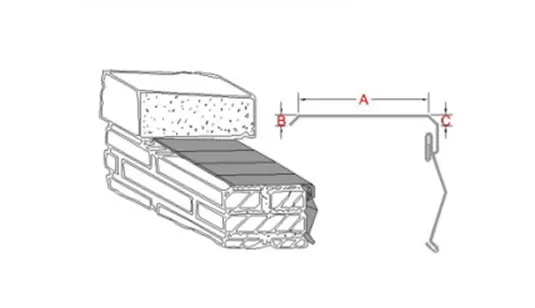
- Continuous cleats fastened along the outside face. The coping’s outer edge hooks onto the cleat, so no fasteners go through the exposed face.
- The coping itself, sloped toward the roof, with drip edges kicked out from both faces.
- Inside-face fastening through slotted holes or a second cleat, so the metal can move with temperature.
- Splice plates under every joint with sealant beads on each side, or standing-seam style joints on some designs.
Why slope the top?
A flat cap holds puddles that sit on the joints and the finish. A slope toward the roof sends that water onto the membrane and the roof drains, and keeps dirty runoff off the face of the building.
Cleats and wind at the roof edge
Coping sits at the roof edge, where wind pressures are high. A continuous cleat holds the outer edge along its full length instead of at a few points. New Jersey has no single statewide wind value; DCA Bulletin 19-1 tells designers to get site-specific values from ASCE 7 hazard tools by address. A roof edge without a parapet takes edge metal instead of coping; see our ES-1 edge metal and gravel stop page.
What metal and gauge should coping be?
Most coping we make is 22 or 24 gauge Galvalume steel or .040-inch aluminum, prefinished in PVDF (Kynar 500 type) or SMP. Wider walls and taller faces call for the heavier option, and 16 oz copper suits historic buildings and masonry.
| Item | Typical spec |
|---|---|
| Steel | 22 or 24 gauge Galvalume, prefinished |
| Aluminum | .040 inch, prefinished |
| Copper | 16 oz, natural finish that weathers over time |
| Finish | PVDF or SMP in the coil maker’s stock colors |
| Top | Sloped toward the roof |
| Outside edge | Hooked onto a continuous cleat, with a drip |
| Joints | Splice plates with sealant, or standing-seam style |
| Section lengths and widths | Set by your dimensions and listed on your quote |
| Lead time | Typically 1-2 days, depending on color and gauge |
Wide coping needs stiffness. A broad, flat top in thin metal can oil-can, which means it shows ripples in low sun. Cross-breaks, a heavier gauge or a sloped profile keep it flat.
Near salt water, check the steel coil’s warranty against the address or choose aluminum; our guide to metal roofing near the Jersey Shore explains why.
Why do parapet walls leak?
Most parapet leaks start at the top. Water gets past open coping joints, face fasteners or cracked masonry caps, then runs down inside the wall and often shows up several feet from where it entered.
- Open joints. Butt joints sealed only with caulk crack as the metal moves. Without a splice plate underneath, water goes straight in.
- Face-nailed coping. Nails or screws through the exposed face work loose over time and leave holes.
- Flat or back-sloped tops. Water ponds on the cap or drains down the facade instead of onto the roof.
- Short drips. Edges that sit tight to the wall let water run down the brick and into the mortar joints.
- Masonry and stone caps. Old clay or stone coping has mortar joints that open with freeze-thaw cycles.
Drifting snow piles against parapets, and meltwater refreezes in any joint it finds; our guide to ice dams and metal roofs in New Jersey covers that freeze-thaw cycle. To trace an existing leak step by step, read parapet leaks and metal coping.
How is coping replaced on an older building?
Your contractor removes the old cap, opens up the wall top, fixes what is underneath and then sets the new metal we fabricate. New coping over a wet, failed parapet only hides the problem.
- Your contractor inspects the parapet from the roof and the street, noting stains, cracks and loose units.
- They measure the wall width at intervals, since old parapets often vary along their length, and send us the widths, run lengths, corners and ends.
- We form the coping, cleats, splice plates, corners and end caps to those dimensions, typically in 1-2 days, for delivery or pickup at the shop.
- The contractor removes the old coping or stone caps, replaces rotted blocking and brings in a mason for masonry repairs.
- They wrap the top with membrane, fasten the cleats and set the new coping over the splice plates.
- They seal the joints and check every drip, corner and end cap.
On historic buildings, a change in coping metal or profile may need review in a local historic district, and 16 oz copper or a profile that matches the old cap keeps the original look. Finish warranties come from the coil maker, and the installation warranty comes from your installer.
How does a metal coping order work?
Send the wall widths and run lengths, and we reply with a written quote within 24-48 hours. There is no minimum order, so one corner piece is quoted the same way as a full building.
- Send dimensions. Include wall widths at several points, run lengths, corners, ends, the metal, the gauge and the color. Use the quote form or the plan upload, email us, or text us a photo or sketch with measurements.
- Get a written quote within 24-48 hours (business days), or our questions if a dimension is unclear.
- Approve shop drawings on architectural and commercial jobs that call for them.
- We fabricate the coping, cleats and splice plates, typically in 1-2 days depending on color and gauge.
- Delivery or pickup. We deliver within about a 5-hour drive of New Brunswick: New Jersey, New York, Pennsylvania, Connecticut, Delaware and Maryland. Delivery cost is quoted with the order. Pickup is at the shop during office hours, Monday–Friday 7 AM–5 PM.
Custom (non-stock) colors carry a minimum quantity. Have a lower written quote for the same parts? Send it with your request and we will match or beat it.
Metal coping for contractors and architects
On new construction and reroofing projects, coping is usually part of the sheet metal or roofing scope. Send drawings and the sheet metal specification section on our send plans page, and we quote metal coping together with the metal flashing and custom trim on the same drawings.
Our custom sheet metal hub covers the rest of the scope, including box gutters behind parapets. Architectural Metal Panels has been in business since 2000 and in New Jersey since 2018. Our shop’s owner has 26+ years in the metal trades.
Metal coping questions
How fast can you make metal coping?
Coping typically takes 1-2 days to fabricate, depending on color and gauge. Written quotes come within 24-48 hours of receiving the wall widths and run lengths, and shop drawings, where a job needs them, are approved before we form the metal.
How long does metal coping last?
Prefinished steel and aluminum coping can last for decades when it is sloped, cleated and spliced correctly, and copper can last longer. Joint sealant needs periodic checks, usually long before the metal itself wears out.
Can new coping go over old stone or terra cotta caps?
It is possible, but it hides cracked joints and wet masonry. In most cases, removing the old caps lets the wall top be repaired and fitted with blocking and membrane before the metal goes on.
Why does my coping have caulk at every joint?
Caulk alone is a weak joint. A proper coping joint has a splice plate underneath with sealant beads on each side, so the metal can move without opening a path for water. Caulk over a bare butt joint usually needs attention.
Does coping need to slope?
Yes. A sloped top sends water onto the roof rather than down the face of the building. Your installer can build the slope into the blocking, or we can form it into the coping profile.
What colors can metal coping be?
Any stock color on the coil maker’s chart, in PVDF or SMP, or natural 16 oz copper that weathers over time. Custom (non-stock) colors carry a minimum quantity. Coping is often matched to the wall panels, the windows or the roof edge.
Do you make coping for homes?
Yes, for homes with parapets, flat-roof additions and modern homes with low-slope roofs, and there is no minimum order. Have your installer measure the wall tops, then request a quote with those widths and lengths.
Do you install the coping you make?
No. We are a fabrication shop. We form the coping, cleats and splice plates to your contractor’s dimensions or approved shop drawings, and your roofer or installer sets them. Field dimensions are the installer’s responsibility.
Request a quote
Tell us what you need: the product, the metal and finish, and your dimensions or cut list. Attach a photo, sketch or cut list if you have one. We reply with a written quote within 24-48 hours. Delivery within about five hours of our New Brunswick shop, or pickup.
Or text a photo or sketch with dimensions to (732) 236-8750
Prefer to talk now? Call (732) 201-5224, Monday–Friday 7 AM–5 PM. Text us a photo or sketch Fully insured
Coping made to your wall widths
Stains under the parapet or loose coping?
Have your contractor measure the wall tops, then send us the widths and run lengths. We reply within 24-48 hours with a written quote for the coping, cleats and splice plates, delivered or ready for pickup. Builders can send plans.