
Compare metal roof systems
Types of Metal Roofing, and Which Ones We Fabricate
The main types of metal roofing are standing seam panels, exposed-fastener panels, metal shingles and shakes, and natural copper and zinc. Each has its own look, minimum pitch, price range and best use. We fabricate standing seam panels, exposed-fastener rib panels and the custom trim and flashing they need. We do not make shingle or shake systems, and we do not install.
- 5 on Google (4 reviews)
- 26+ years of experience
- Delivery or shop pickup
Which type of metal roof is right for your building?
For most houses, standing seam. For a traditional look, metal shingles or shakes. For barns and sheds, exposed-fastener panels. For heritage details and the longest service life, copper or zinc.
| Type | Fasteners | Lowest slope (typical) | Best use | From our shop? |
|---|---|---|---|---|
| Standing seam, snap-lock | Hidden under the seams | Code allows 1/4:12; many snap-lock profiles need 2/12 or more | Houses, garages, additions | Yes, fabricated to length |
| Standing seam, mechanical | Hidden; seam folded on the roof | As low as 2/12, or 1/12 for some steel profiles with seam sealant | Low slopes, long runs, snowy sites, commercial roofs | Yes; ask about seam heights |
| Exposed-fastener panels | Screws through the panel face | 3:12, or 1/2:12 with applied lap sealant | Barns, sheds, pole buildings | Yes, rib and PBR profiles |
| Metal shingles and shakes | Hidden in the interlocks | 3:12 under the model code | Traditional-looking homes | No; manufactured systems |
| Copper | Hidden cleats and clips | Depends on the seam; soldered flat-lock handles low slopes | Bays, porches, turrets, full roofs | On request |
| Zinc | Hidden clips | Per the manufacturer’s system | Modern and historic homes | On request |
Standing seam: snap-lock and mechanical
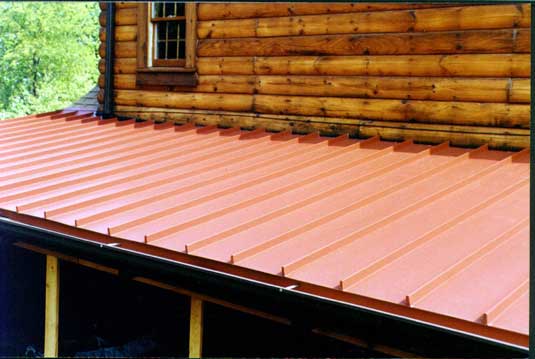
Standing seam is a roof of long panels joined at raised seams that hide the clips. It comes in two main families, and the difference matters in a New Jersey winter.
Snap-lock
Panels click together along the seam, which makes them quick to put on. It is the usual choice on house roofs from roughly 3/12 to 7/12, in line with Sheffield Metals’ guidance.
Mechanical seam
A seaming tool folds the seam once or twice after the panels are set. Sheffield rates its 1.5-inch mechanical profile to 2/12. It also points snowy regions toward mechanical seams, since moving snow and ice can unlatch snap-lock joints.
Standing seam is our flagship roofing product. We fabricate the panels to the lengths your roofer measures, with matching trim and flashing. Our standing seam roof panels page covers seam heights, gauges, finishes and what to send us.
What are metal shingles and shakes?
They are smaller interlocking metal pieces pressed and finished to look like slate, cedar shake, tile or traditional shingles. They suit owners who want a metal roof that does not read as panels from the street.
Shingle and shake systems are manufactured products with their own matching trim, sold through their makers’ own channels. EDCO and Classic Metal Roofing Systems are two such manufacturers. We do not make these systems.
Followed an older link here for ArrowLine, Generations HD, Country Manor Shake, Oxford Shingle, Rustic Shingle, Slate Rock Oxford or Grandetile? Those are manufactured shingle and shake products, not parts we fabricate. Ask the product’s manufacturer where to buy it.
The model residential code sets a 3:12 minimum slope for metal roof shingles. HomeGuide’s 2026 national guide puts them at about $6 to $14 per square foot, an installed total that includes labor by others. If a shingle or shake roof needs a custom chimney or wall flashing that its system trim does not cover, your roofer can send us the dimensions; see metal flashing.
Exposed-fastener and corrugated panels
These are ribbed or corrugated sheets screwed through the face with gasketed screws. They cost less and go on fast, which is why they suit barns, sheds, pole buildings, detached garages and lean-tos.
The trade-off is upkeep. Every exposed screw has a washer that ages in the sun and can loosen as the metal expands and contracts. On a heated house, many roofers steer owners toward standing seam instead.
The model residential code sets the minimum slope for lapped panels at 3:12 without lap sealant, or 1/2:12 with applied sealant. Our panel line includes the AMP 7.2 Rib, which works as a wall or roof panel, and AMP PBR corrugated panels, the metal-building staple. See corrugated metal panels for the look.
Copper and zinc
Copper and zinc are natural metals that are not painted; they weather to a patina. They cost the most of any metal roof type, and by published estimates they last the longest.
The estimates run past a century for copper, according to the Copper Development Association, and to a 100-year design life for zinc, according to VMZINC. Both are common on bay windows, porches and turrets of older homes. We fabricate copper and zinc parts on request, so ask us first; see copper and zinc sheet metal and our guide to copper and zinc in historic districts.
How do the types compare on cost and lifespan?
Exposed-fastener panels cost least, standing seam and shingles sit in the middle, and copper and zinc cost the most. These national 2026 figures from HomeGuide are installed totals that include labor by others:
- Metal shingles and shakes: about $6 to $14 per square foot installed
- Standing seam: about $9 to $16 per square foot installed
- Zinc: about $1,000 to $2,000 per square (100 square feet) installed
- Copper: about $1,300 to $3,000 per square (100 square feet) installed
For a materials price on the panels and trim we make, send your dimensions. A typical asphalt shingle roof averages roughly 15 to 30 years by the CDA’s count. Our metal roof panel prices page explains what moves a price, and why asphalt roofs fail covers the shingle side.
Which type works near the shore or in heavy snow?
Near salt water, aluminum standing seam, because steel substrate warranties exclude salt exposure. In heavy snow, mechanical seam with snow guards.
Metal Sales, for example, excludes sites within 1,500 feet of salt water from its Galvalume warranty. Read metal roofing near the Jersey Shore and snow guards for metal roofs for the details your roofer will plan.
Request a quote
Tell us what you need: the product, the metal and finish, and your dimensions or cut list. We reply with a written quote. Delivery in New Jersey or pickup at our shop.
Prefer to talk now? Call (732) 201-5224. Fully insured
Questions about metal roof types
Which type of metal roof lasts longest?
By published estimates, copper and zinc: over a century for copper per the Copper Development Association, and a 100-year design life for zinc per VMZINC. Among painted metals, standing seam with hidden fasteners and a PVDF finish needs the least upkeep.
Do you make ArrowLine, Country Manor Shake or Oxford Shingle?
No. Those are manufactured metal shingle and shake products, sold through their makers’ own channels. We fabricate standing seam and rib panels plus custom trim and flashing.
Are metal shingles as good as standing seam?
They do a different job. Standing seam has fewer joints and works on lower slopes, while shingles and shakes need at least 3:12 under the model code and suit owners who want a traditional texture.
Can I use exposed-fastener panels on my house?
You can, but many roofers advise against it on a heated home. The exposed screws need periodic checks, and the lapped joints are less forgiving with ice. They are a sound, economical choice for outbuildings.
What is the difference between snap-lock and mechanical seam?
Snap-lock panels click together; mechanical seam panels are folded closed with a seaming tool. Mechanical seam handles lower slopes and heavy snow better and takes more labor to put on. We fabricate both to the lengths on your order.
Which metal roof should I choose near the ocean?
Aluminum is often the safer base metal near salt water. Steel warranties can exclude salt exposure; Metal Sales’ Galvalume warranty, for example, excludes sites within 1,500 feet of salt water.
Choosing a system
Not sure which panel your roof needs?
Send your roofer’s measurements and the pitch, and tell us what you are weighing. We reply with a written quote or questions on the panels and trim that fit.