
Box gutters are troughs built into the roof edge, cornice or parapet instead of hanging from the fascia. When they leak, the water goes straight into the wall or cornice, so the repair choice matters. Repair a leak in one spot when the liner around it is sound. Reline when the liner is worn but the wood under it is solid. Replace when the framing has rotted or the gutter is too small or too flat.
This guide shows how to read the warning signs, inspect the trough and decide which case you have. Architectural Metal Panels fabricates box gutter liners, end caps, outlets and scuppers in our New Brunswick, NJ shop to the dimensions your contractor takes. Your roofer or sheet metal contractor inspects the gutter and installs the liner.
What is a box gutter?
A box gutter is a trough built into the structure of the building and lined with metal or a membrane. A hanging gutter is a separate channel fastened to the fascia. That is why so many older New Jersey homes, churches and main-street storefronts show a clean cornice with no visible gutter.
- Built-in cornice gutters on houses, hidden inside a decorative cornice at the eave.
- Roof-mounted gutters, often called Yankee gutters, built on the roof surface just above the eave.
- Commercial box gutters inside the roof line, behind a parapet or between two roof sections.
Original liners were often terne-coated steel, copper or lead-coated copper, soldered into long runs. On a building that is a century old, that liner may carry decades of patches.
What are the warning signs of a leaking box gutter?
Look below the gutter, not just in it. Box gutter leaks show up as damage to the wood and plaster around them, often long before anyone sees water.
- Peeling paint, soft wood or rot on the cornice, fascia, soffit or crown molding
- Stains on top-floor ceilings, or on exterior walls just below the cornice
- Icicles hanging from the soffit or cornice face rather than the gutter edge
- Water sheeting over the front of the gutter in heavy rain
- Standing water, rust, plants or black tar in the trough
- Downspouts that stay dry while the gutter overflows
How do you inspect a box gutter?
Work from the outside in: watch the gutter in rain, test the outlets, then look at the liner and the wood under it. Ladder and roof work belong to a roofer or sheet metal contractor with fall protection.
- Watch it in a heavy rain. Note where water spills over the front, drips from the soffit or runs down the wall. Mark those spots for the closer look.
- Test the outlets. Run a hose into the trough near each outlet. Water should drain at once. A slow outlet or a blocked leader fills the gutter from the bottom.
- Check the slope. Run water at the far end of each run. If it pools or stops before the outlet, the framing has sagged or the gutter was built too flat.
- Read the liner. Look for split seams, rust-through, pinholes, thin spots where debris sat, and tar patches. Count the patches.
- Check the back edge. The liner should run well up under the roofing. A short back flange lets backed-up water and ice spill over the top and into the wall.
- Probe the wood. Press a screwdriver into the cornice, soffit and fascia. From the attic, look at the rafter tails and blocking behind the gutter for stains and soft spots.
The answers to steps 4 and 6 decide most jobs: how much liner is still sound, and whether the wood under it can carry a new one.
When is a box gutter repair enough?
A repair is enough when the leak is in one spot and the liner around it is still sound. The wood should also be dry and solid.
Typical repairs include cleaning and re-soldering a split seam, patching a small hole with matching metal, resetting an outlet with a new drop tube and clearing a clogged leader. A repair only buys time if the liner is worn thin elsewhere. When a trough already carries many patches, another one rarely solves the problem for long.
When should a box gutter be relined?
Reline when the liner is worn or patched in many places but the wood trough and framing beneath it are solid. Relining puts a new liner into the existing trough without rebuilding the cornice.
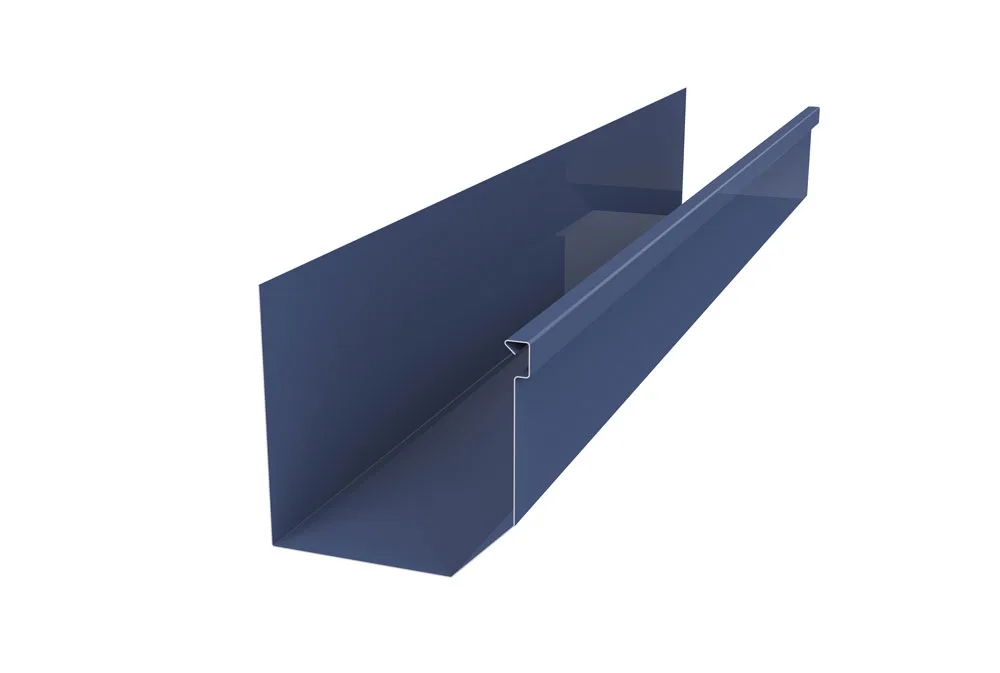
A metal liner is formed to the shape of the trough in sections, with expansion joints so long runs can move. It runs up under the roofing on the back side and turns over the front edge with a drip, so water cannot get behind it. New outlets, end caps and leaders go in at the same time.
Copper, prefinished steel and aluminum are the usual liner metals; the box gutter liners page compares them. Membrane relining with rubber sheet, liquid rubber or epoxy changes the look of the trough. On a visible historic cornice, a metal liner is usually the closer match.
When does a box gutter need replacement?
Replace or rebuild when the wood trough, blocking or rafter tails underneath have rotted. The same goes for a gutter that is too small or too flat for its roof, or one where old repairs left nothing sound to reline over.
A rebuild means opening the cornice, removing the old liner, replacing rotted wood, building in slope toward the outlets and setting a new liner, outlets and leaders. Cornice trim is often repaired at the same time. Because framing work can affect structural safety, your contractor should ask the local construction office whether the job needs a permit.
Repair, reline or replace: which fits what you found?
Match the condition of the liner and the wood to the answer. When in doubt, the wood decides: a new liner over rotted framing will not last.
| What the inspection finds | Likely answer | Why |
|---|---|---|
| One split seam or small hole; rest of the liner sound | Repair | The problem is local and the liner has life left |
| Many patches, rust spots or tar, but solid wood | Reline | The trough can carry a new liner |
| Soft or rotted trough, blocking or rafter tails | Replace or rebuild | A new liner needs sound wood under it |
| Water pools along the run | Rebuild the slope, then reline | Standing water wears out any liner |
| Overflow in every heavy rain | Clear or enlarge outlets first | The trough may be fine; the outlet is the limit |
| Leaks only in winter | Fix attic heat loss; check the back flange | Ice holds water against the top of the liner |
Why do box gutters leak only in winter?
Usually because of ice. Heat escaping from the house melts snow higher on the roof, and the water refreezes at the cold edge, where the box gutter sits, as the University of Minnesota Extension explains. The ice then holds water against seams and the back edge of the liner. Our guide to ice dams and metal roofs explains the attic side of the fix.
Should you convert to hanging gutters instead?
Some owners do, but it changes how the building looks and may need approval first. Converting means closing in the trough, carrying the roofing out to the edge and hanging a gutter on the fascia.
In a local historic district, a change like that can go through design review; our guide to historic district roofs explains how that works. If the conversion goes ahead, we roll-form 5-inch and 6-inch K-style gutters to length from aluminum, steel or copper coil for your installer to hang. On many older buildings, though, a relined box gutter keeps the original look and does the job.
How are commercial box gutters different?
On flat and low-slope commercial roofs, box gutters sit inside the roof line, often behind a parapet or between building sections. If one clogs, water backs up onto the roof instead of spilling off an edge.
That raises the stakes. Commercial box gutters need outlets and leaders sized to the roof area they serve, overflow scuppers so a clog cannot flood the roof, and expansion joints on long runs. Where they meet the parapet, metal coping and counter-flashing have to lap into the gutter detail. Our guide to parapet leaks covers the wall side.
What maintenance keeps a box gutter working?
Keep it clean, keep water moving and never patch with tar. Roof cement holds water against the metal and has to be scraped off before any proper repair.
- Clear leaves and grit from the trough and outlets each spring and fall, and after big storms
- Check that leaders run freely; a clogged downspout fills the gutter from the bottom
- Keep overhanging branches trimmed back
- Never chip ice out of a box gutter with a metal tool
- Repaint the cornice wood below the gutter, where leaks show first
Box gutter questions
How long does a box gutter liner last?
It depends on the metal and how well it was detailed. Copper and prefinished steel liners with proper expansion joints and outlets can last for decades, while membranes and coatings need attention sooner. Slope, cleaning and ice exposure matter as much as the metal.
Can a new liner go into an old box gutter?
Yes, if the wood trough and framing underneath are solid. The contractor cleans out or removes the old liner, then fits a new formed metal liner with expansion joints and new outlets. If the wood has rotted, it has to be rebuilt first.
Can box gutters be replaced with regular gutters?
Yes. The trough is closed in, the roofing is carried to the edge and a hanging gutter goes on the fascia. It changes the look of the building, so check for historic district rules first, and compare it with relining before you decide.
Who measures a box gutter for a new liner?
Your roofer or sheet metal contractor. They measure the trough profile, every run, the corners and the outlets, and send us the dimensions. We fabricate the liner sections to those numbers, with no minimum order, and the lead time is on your quote.
Is a membrane liner as good as metal?
A rubber or coated liner goes in faster and can work on hidden gutters. It changes the look, needs attention sooner and is harder to detail at outlets and seams. On a visible or historic cornice, a formed metal liner is the usual choice.
Box gutter liners made to your dimensions
Found a worn liner or a rotting cornice?
Send the trough profile, run lengths and outlet locations your contractor measured, or a set of plans. We reply with a written quote within 24-48 hours. Liner sections are delivered within about a 5-hour drive of our New Brunswick shop, or picked up during office hours, Monday–Friday 7 AM–5 PM.
Have a lower written quote for the same parts? Send it with your request and we will match or beat it.